Carolyn Forché
Award-winning Poet of Witness
Human Rights Advocate
National Book Award Finalist
Readings &
Lecture Topics
- Against Forgetting
- Conflict in Literature
- Voice of Witness
- An Evening with Carolyn Forché
Biography
“Carolyn Forché shows how people survive in an unbearable world.” —Daina Savage
“Part of poetry’s tragic knowledge is that elegy is endless. Yet in its power to recall and to memorialise, elegy also effaces time and reinvests loss, the lost, with life. It is a form of overcoming, essential to our knowing of, and dwelling in, the present and to our becoming human… Carolyn Forche is one of the contemporary masters of that form, that act.” —Michael Palmer
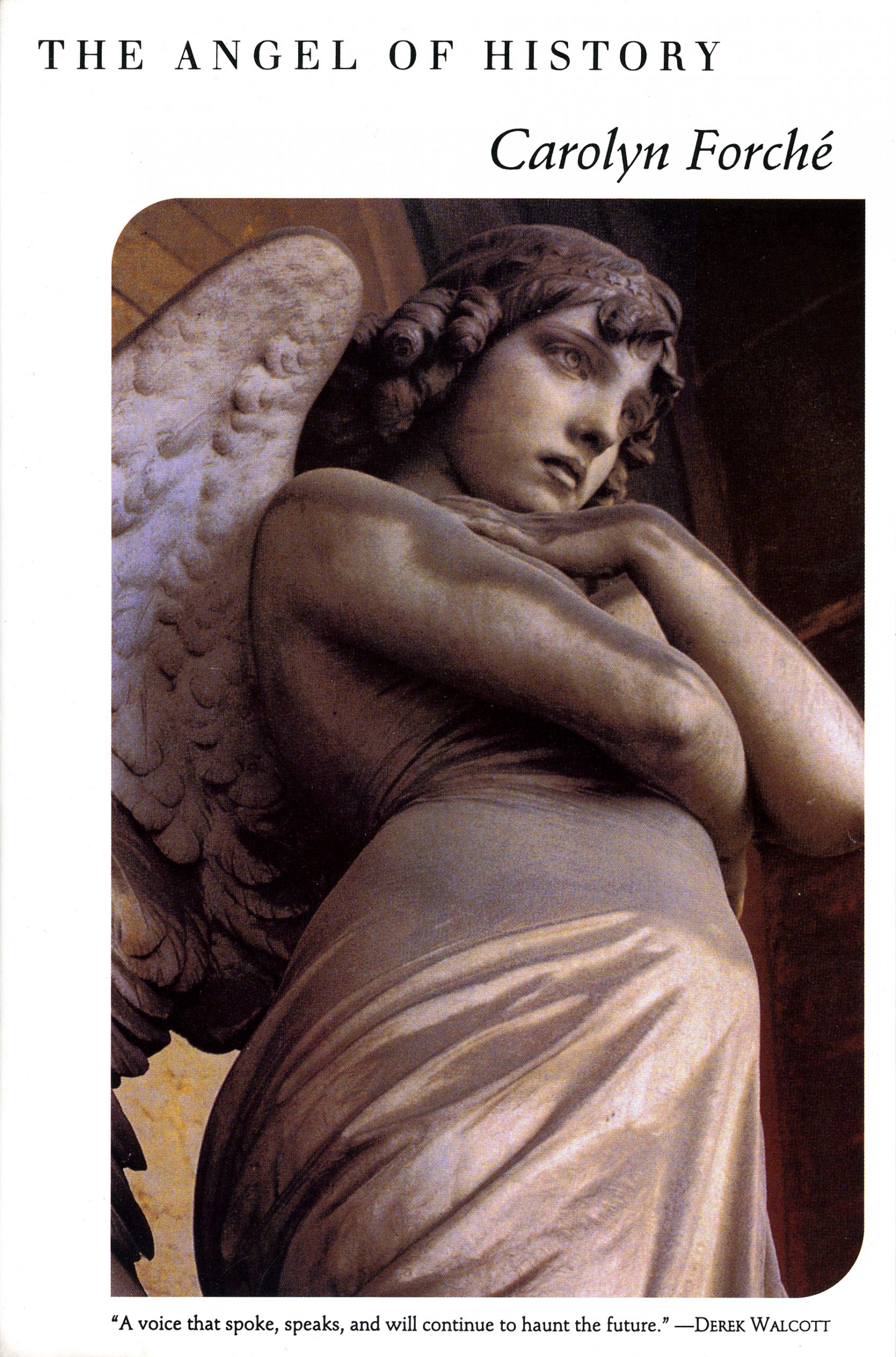
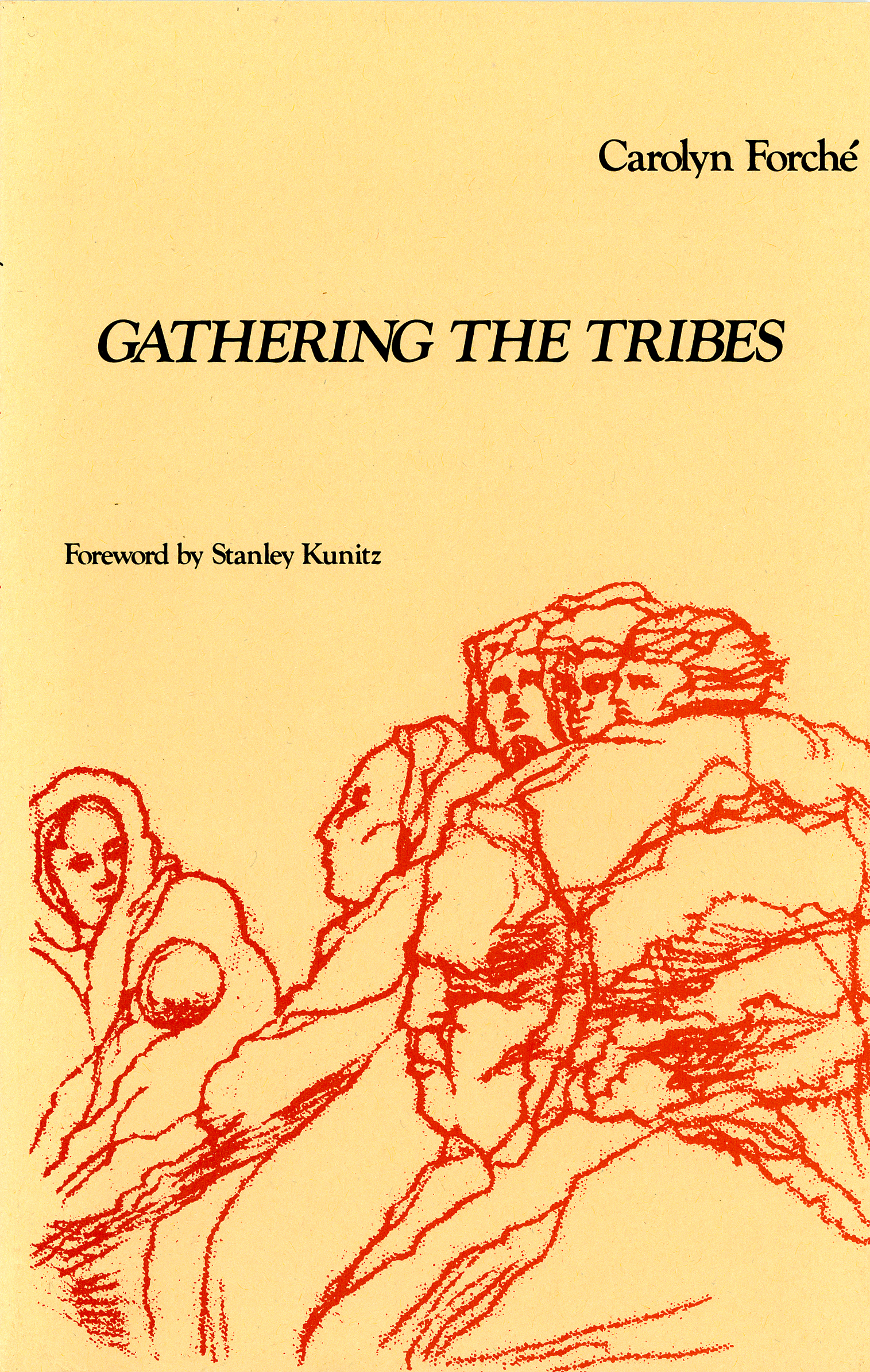
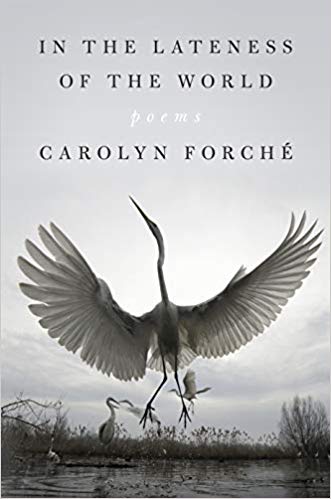
Renowned as a “poet of witness,” Carolyn Forché is the author of five books of poetry. Her first poetry collection, Gathering The Tribes (Yale University Press, 1976), won the Yale Series of Younger Poets Award. In 1977, she traveled to Spain to translate the work of Salvadoran-exiled poet Claribel Alegría, and upon her return, received a John Simon Guggenheim Foundation Fellowship, which enabled her to travel to El Salvador, where she worked as a human rights advocate. Her second book, The Country Between Us (Harper and Row, 1982), received the Poetry Society of America’s Alice Fay di Castagnola Award, and was also the Lamont Selection of the Academy of American Poets. Her third book of poetry, The Angel of History (HarperCollins, 1994), was chosen for The Los Angeles Times Book Award. Blue Hour is her fourth collection of poems (HarperCollins, 2003). Her most recent collection, In the Lateness of the World (Penguin Press, 2020), is a tenebrous book of crossings, of migrations across oceans and borders but also between the present and the past, life and death.
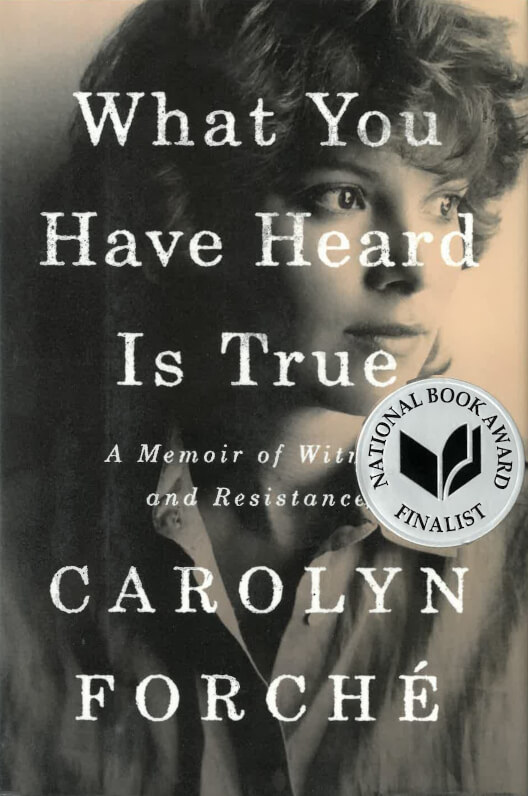
She is also the author of the 2019 memoir What You Have Heard Is True (Penguin Random House), a devastating, lyrical, and visionary book about a young woman’s brave choice to engage with horror in order to help others. What You Have Heard Is True was a finalist for the 2019 National Book Award. Claire Messud writes, “In this searing, vital memoir, Carolyn Forché at last reveals the dark stories behind her famous early poems: she brings alive the brutality, complexity and idealism of El Salvador in the late 1970s, a time of revolution that echoes all too painfully in the present. What You Have Heard Is True, a riveting and essential account of a young woman’s political and human awakening, is as beautiful as it is painful to read.” And Claudia Rankine notes: “What You Have Heard Is True is as much an enthralling account of a life marked by an encounter as it is a document of a time and place. Carolyn Forché’s urgent and compelling memoir narrates her role as witness in an especially explosive and precarious period in El Salvador’s history. This incredible book shapes chaos into accountability. It marries the attentive sensibility of a master poet with the unflinching eyes of a human rights activist.”
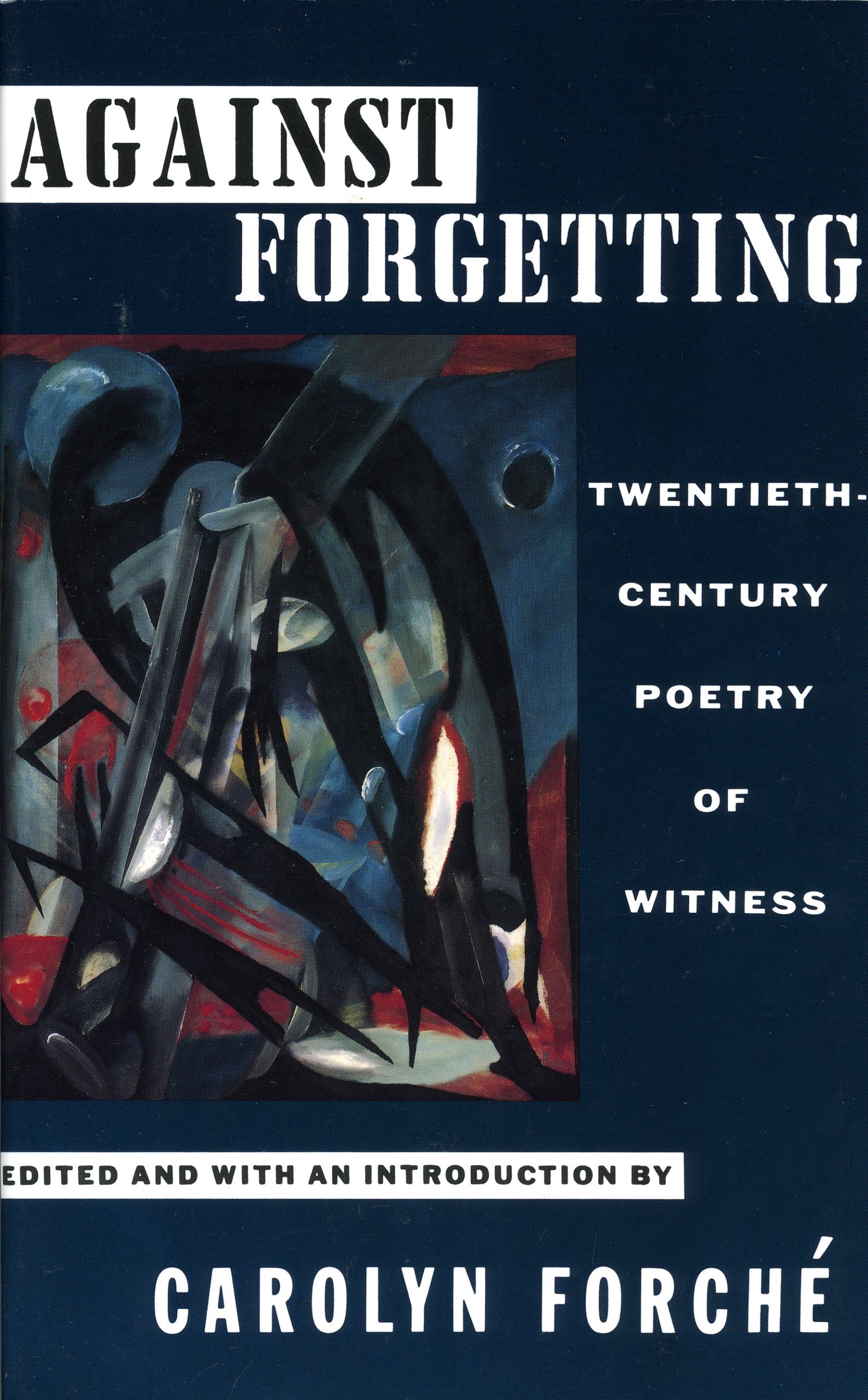
Forché’s most recent anthology, co-edited alongside Ilya Kaminsky, In the Hour of War: Poetry from Ukraine, offers a startling look at the way language both affects and reflects the realities of war and extremity. Her anthology, Against Forgetting: Twentieth Century Poetry of Witness, was published by W.W. Norton & Co. in 1993. In 2014, her anthology, The Poetry of Witness: The Tradition in English, 1500-2001, was published. Her translation of Claribel Alegria’s work, Flowers From The Volcano, was published by the University Pittsburgh Press in 1983. In 2000, Curbstone Press published a new book of her translations of Alegría, entitled Sorrow. In 1983, Writers and Readers Cooperative (New York and London) published El Salvador: Work of Thirty Photographers, for which she wrote the text. In 1991, The Ecco Press published her translations of The Selected Poetry of Robert Desnos (with William Kulik). She co-translated Selected Poetry of Mahmoud Darwish (University of California Press, 2002), from which a chapbook selection had been published by The Lannan Foundation (2001).
In 1998 in Stockholm, she was given the Edita and Ira Morris Hiroshima Foundation for Peace and Culture Award, in recognition of her work on behalf of human rights and the preservation of memory and culture. Her articles and reviews have appeared in The New York Times, The Washington Post, The Nation, Esquire, Mother Jones, and others. Forché has held three fellowships from The National Endowment for the Arts, and in 1992 received a Lannan Foundation Literary Fellowship. In 2013, Forché won the Academy of American Poets Fellowship for distinguished poetic achievement. “For her steady gaze into the abyss and for her crafted house of awakened human heavens where she calls us to live,” said academy chancellor Juan Felipe Herrera, “we celebrate and recognize Carolyn Forché and her heroic career: gathering word-by-word embers … to face and save lives. Before they are disappeared.” In 2014 Forche was announced a finalist for the 24th Neustadt International Prize for Literature.
Carolyn Forché is Lannan Visiting Professor of Poetry and Professor of English at Georgetown University, and lives in Maryland with her husband, Photographer Harry Mattison.
Short Bio
Carolyn Forché’s first volume, Gathering the Tribes, winner of the Yale Series of Younger Poets Prize, was followed by The Country Between Us, The Angel of History, and Blue Hour. Her most recent collection is In the Lateness of the World. She is also the author of the memoir What You Have Heard Is True (Penguin Random House, 2019), a devastating, lyrical, and visionary memoir about a young woman’s brave choice to engage with horror in order to help others, which was nominated for the 2019 National Book Awards. She has translated Mahmoud Darwish, Claribel Alegria, and Robert Desnos. Her famed international anthology, Against Forgetting, has been praised by Nelson Mandela as “itself a blow against tyranny, against prejudice, against injustice,” and is followed by the 2014 anthology The Poetry of Witness. In 1998 in Stockholm, she received the Edita and Ira Morris Hiroshima Foundation for Peace and Culture Award for her human rights advocacy and the preservation of memory and culture.
Visit Author WebsiteVideos
Publications
In the Lateness of the World
Poetry, 2020
“An undisputed literary event.” — NPR
Over four decades, Carolyn Forché’s visionary work has reinvigorated poetry’s power to awaken the reader. Her groundbreaking poems have been testimonies, inquiries, and wonderments. They daringly map a territory where poetry asserts our inexhaustible responsibility to each other. Her first new collection in seventeen years, In the Lateness of the World is a tenebrous book of crossings, of migrations across oceans and borders but also between the present and the past, life and death. The poems call to the reader from the end of the world where they are sifting through the aftermath of history. Forché envisions a place where “you could see everything at once … every moment you have lived or place you have been.” The world here seems to be steadily vanishing, but in the moments before the uncertain end, an illumination arrives and “there is nothing that cannot be seen.” In the Lateness of the World is a revelation from one of the finest poets writing today.
What You Have Heard is True
Memoir, 2019
“This luminous book stands beside the memoirs of Pablo Neruda and Czeslaw Milosz in its account of a poet’s education, the struggle of a great artist to be worthy of her gifts. Carolyn Forché’s prose is shamanic: it sees both the surface of things and their inner workings, it animates the inanimate world.” —Garth Greenwell
What You Have Heard is True is a devastating, lyrical, and visionary memoir about a young woman’s brave choice to engage with horror in order to help others. Written by one of the most gifted poets of her generation, this is the story of a woman’s radical act of empathy, and her fateful encounter with an intriguing man who changes the course of her life. She is twenty-seven when the mysterious stranger appears on her doorstep. The relative of a friend, he is a charming polymath with a mind as seemingly disordered as it is brilliant. She’s heard rumors from her friend about who he might be: a lone wolf, a communist, a CIA operative, a sharpshooter, a revolutionary, a small coffee farmer, but according to her, no one seemed to know for certain. He has driven from El Salvador to invite Forché to visit and learn about his country. Captivated for reasons she doesn’t fully understand, she accepts and becomes enmeshed in something beyond her comprehension. Together they meet with high-ranking military officers, impoverished farm workers, and clergy desperately trying to assist the poor and keep the peace. These encounters are a part of his plan to educate her, but also to learn for himself just how close the country is to war. As priests and farm-workers are murdered and protest marches attacked, he is determined to save his country, and Forché is swept up in his work and in the lives of his friends. Pursued by death squads and sheltering in safe houses, the two forge a rich friendship, as she attempts to make sense of what she’s experiencing and establish a moral foothold amidst profound suffering. This is the powerful story of a poet’s experience in a country on the verge of war, and a journey toward social conscience in a perilous time.
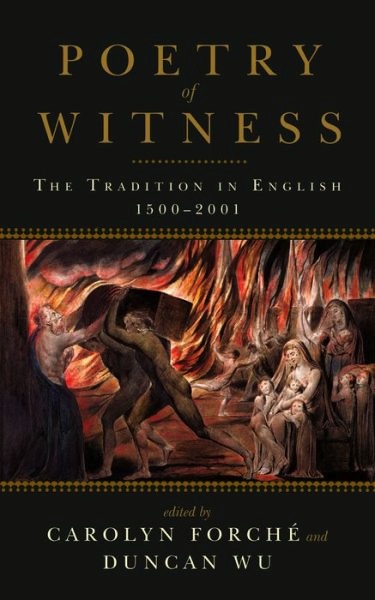
The Poetry of Witness
Anthology, 2014
Poetry of Witness: The Tradition in English, 1500-2001, is a groundbreaking anthology containing the work of poets who have witnessed war, imprisonment, torture, and slavery. As a companion volume to Against Forgetting, Poetry of Witness is the first anthology to reveal a tradition that runs through English-language poetry. The 300 poems collected here were composed at an extreme of human endurance—while their authors awaited execution, endured imprisonment, fought on the battlefield, or labored on the brink of breakdown or death. All bear witness to historical events and the irresistibility of their impact. Alongside Shakespeare, Milton, and Wordsworth, this volume includes such writers as Anne Askew, tortured and executed for her religious beliefs during the reign of Henry VIII; Phillis Wheatley, abducted by slave traders; Samuel Bamford, present at the Peterloo Massacre in 1819; William Blake, who witnessed the Gordon Riots of 1780; and Samuel Menashe, survivor of the Battle of the Bulge. Poetry of Witness argues that such poets are a perennial feature of human history, and it presents the best of that tradition, proving that their work ranks alongside the greatest in the language.
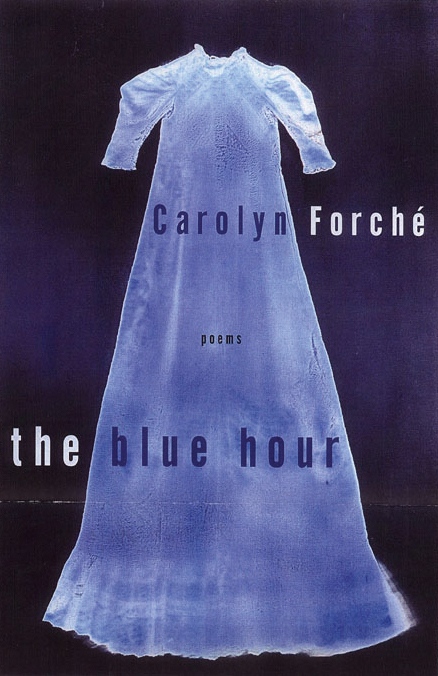
The Blue Hour
Poetry, 2003
The title of this collection translates the French phrase for pre-dawn light into a state of mind that turns everything into a hypnopompic dream or bardic state. Forché’s speaker’s memories (of childhood, of nursing her son in Paris) are intermingled with ethereal images of twentieth-century horror, and dosed with a mysticism derived from Heidegger and Buber. This puts her squarely in the territory of visionary abstraction Michael Palmer and Jorie Graham have been mining; like them, Forché is willing to let the contradictions of this technique speak for themselves. “In the Exclusion Zones,” for example, is lovely and mysterious in its brevity, but is revealed in the endnotes to refer to the contaminated earth around Chernobyl. The book’s tour de force, “On Earth,” orders arrhythmic fragments alphabetically over 47 pages in the manner of “gnostic abecedarians,” and foregrounds its lyric complications more concretely: “more ominous than any oblivion/mortar smoke mistaken for an orchard of flowering pears.” The poems’ success ultimately rests in the reader’s tolerance for gestures aimed at sensuality and sensibility in the face of atrocity, though the ten or so shorter poems that precede “On Earth” are more modest in their ambitions, arousing and sating the longing for beauty with fewer attendant complications.
Articles & Audio
Read What’s In Print
• Carolyn Forché’s Education in Looking – The New Yorker
• How Poetry Can Bear Witness to Crisis and Revolution – The Nation
• Meet the Finalists for Next Week’s National Book Awards – LitHub
• Carolyn Forché’s Memoir Proves We Need Poets to Chronicle Wars — Paste
• Review: Carolyn Forché’s memoir reveals beauty of El Salvador, brutality of civil war — LA Times
• Carolyn Forche winner of a 2017 Windham-Campbell Prize – Detroit Free Press
• “Poetry in Extremis”: on Poetry of Witness — The New Yorker
• Interview with Carolyn Forché — A Warm Green Linden
• Interview on Poetry of Witness — PBS NewsHour
• Review of The Blue Hour — Oyster Boy Review
Listen to Audio
• Lines from the Front: Carolyn Forché’s anthology of Ukrainian poetry – The American Scholar
• Singing Through Dark Times with Carolyn Forche – PEN
• Carolyn Forche: Poetry to Get You Through the Pandemic – KPFA
• Carolyn Forché Reads with James Longenbach — Lannan Foundation
Selected Writings
• Read “‘Exile’: For Ilya Kaminsky” by Carolyn Forche – LitHub
THE LIGHTKEEPER
A night without ships. Foghorns called into walled cloud, and you
still alive, drawn to the light as if it were a fire kept by monks,
darkness once crusted with stars, but now death-dark as you sail inward.
Through wild gorse and sea wrack, through heather and torn wool
you ran, pulling me by the hand, so I might see this for once in my life:
the spin and spin of light, the whirring of it, light in search of the lost,
there since the era of fire, era of candles and hollow-wick lamps,
whale oil and solid wick, colza and lard, kerosene and carbide,
the signal fires lighted on this perilous coast in the Tower of Hook.
You say to me stay awake, be like the lensmaker who died with his
lungs full of glass, be the yew in blossom when bees swarm, be
their amber cathedral and even the ghosts of Cistercians will be kind to you.
In a certain light as after rain, in pearled clouds or the water beyond,
seen or sensed water, sea or lake, you would stop still and gaze out
for a long time. Also when fireflies opened and closed in the pines,
and a star appeared, our only heaven. You taught me to live like this.
That after death it would be as it was before we were born. Nothing
to be afraid. Nothing but happiness as unbearable as the dread
from which it comes. Go toward the light always, be without ships.
CURFEW
for Sean
The curfew was as long as anyone could remember
Certainty’s tent was pulled from its little stakes
It was better not to speak any language
There was a man cloaked in doves, there was chandelier music
The city, translucent, shattered but did not disappear
Between the no-longer and the still to come
The child asked if the bones in the wall
Belonged to the lights in the tunnel
Yes, I said, and the stars nailed shut his heaven
—from Blue Hour
IN THE PLACE DES MARTYRS
That morning they lifted above their heads
what appeared to be a doll in a christening gown
and we stood in the blasted haze waiting for long white
plumes to stanch the fires quickening through
carpets and bedclothes, a tea service, a tender curtain,
and we did not turn away, nor did we photograph the child,
—except at the moment of its being raised—
but later we walked to the Place des Martyrs
where a stillness had been created entirely
by small arms-fire that had blistered walls, blackened shops
and taken from the movie-house all but its blank screen,
where once all manner of figures had shone,
wavering, composed of light through what was
now nothing: a country. Or such was the hope.